Waist Bag Bulk Order: 5 Belt and Buckle Specs
In a bulk waist bag order the bag body rarely fails first. The belt and buckle do. A strap that will not hold its adjustment, a buckle that cracks under a cold snap, or webbing that twists in the wash will bring the whole order back as a return. Specify five numbers on the belt and buckle before you approve a sample and you remove most of that risk. This guide sets out those five specs and how to check each on a physical sample.
Start With Who Wears It and How Often
A waist bag for a stadium event is worn for a few hours. A travel bag is worn for days with a load in the pouch. A work bag is worn every day and washed occasionally. The belt and buckle that suit the first will not suit the third. Decide the use first, then set the strap width and buckle material to match it, rather than copying the cheapest sample the factory sends.
Write the use case into the purchase order in one line. It gives the factory a reason to accept a higher buckle cost where it matters and to save cost where it does not. Without that line, every quote looks the same on paper and the differences only appear in returns six months later.
The Five Specs That Decide Returns
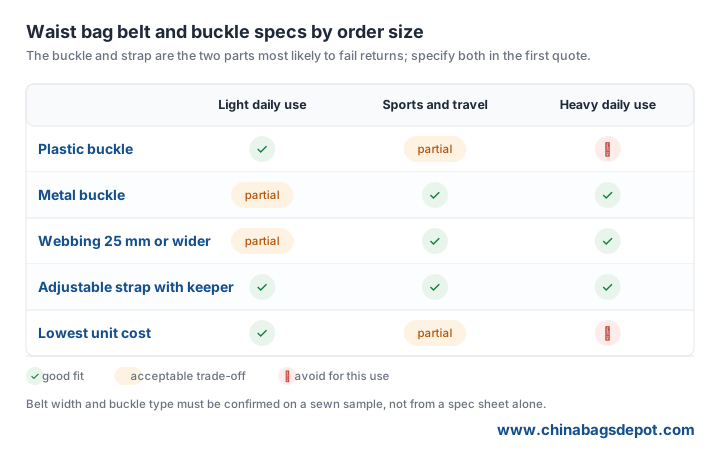
First, webbing width. Twenty-five millimetres is the minimum for a bag that carries more than a phone; narrower strap digs in and twists. Second, buckle type and brand. A moulded plastic buckle is cheap and fine for light use, but a metal buckle survives cold and repeated clipping better. Third, adjustment range. Give the minimum and maximum waist in centimetres and make sure the strap has enough travel between them.
Fourth, the surface against the body. A soft backing or a wider contact area stops the strap from rolling. Fifth, water resistance of the webbing and buckle. A surface-treated strap dries faster and resists odour after a sweaty day. The matrix below shows how the common options line up by use.
How to Check Each Spec on a Sample
Measure the webbing with a ruler, not by eye. Clip and unclip the buckle fifty times and look for stress whitening at the latch, which is the first sign of a plastic buckle about to fail. Pull the strap through the adjuster under a load that matches a full pouch, then mark where it slips. If it moves more than a few millimetres, specify a friction keeper or a different adjuster.
For water resistance, spray the strap and wipe it. A treated webbing sheds water; an untreated one soaks it up and stays damp against the wearer. Repeat the buckle clip test after the strap has dried, since some coatings stiffen the webbing and make the adjuster harder to move.

Sizing the Adjustment Range for Your Market
Waist range is the spec buyers most often get wrong because they measure the bag, not the person. Ask the factory for the effective waist range in centimetres with the pouch empty and again with it full, since a loaded bag sits lower and needs a longer strap. If you sell into more than one market, check the clothing sizes those markets use and map them to a centimetre range rather than to a label size.
A range that is too short is obvious on the first fitting. A range that is too long leaves a tail of webbing hanging from the waist, which wearers tuck in and then pull out again. The keeper loop is what controls that tail, so specify its position and that it slides freely. On a sample, fit the bag to the smallest and the largest person in your test group and check that the buckle still sits at the front, not at the hip.
What to Lock in the Purchase Order
Your order should name the webbing width in millimetres, the buckle material and supplier, the waist adjustment range in centimetres, the backing material and the webbing treatment. Ask the factory to confirm each line on the spec sheet and to flag any substitution before production. A buckle change mid-run is invisible in a shipping invoice and obvious in a return rate.
Add a clause that the same five specs must hold across every colour in the order. Dyes can stiffen webbing and change how a buckle clips, so test one sample of each colour rather than assuming they behave alike. Keep the approved sample signed and dated, and compare the first production carton against it before the balance payment. For buyers building a wider programme, our waist bag range covers the body styles these specs apply to. Send us your target use, waist range and order quantity and we will quote a bag with the belt and buckle written into the spec, plus a sample you can put through the clip and pull tests above.
Need custom bags for your next project?
Send your bag style, size and print artwork for a quote and a digital proof.
Get a free quote


